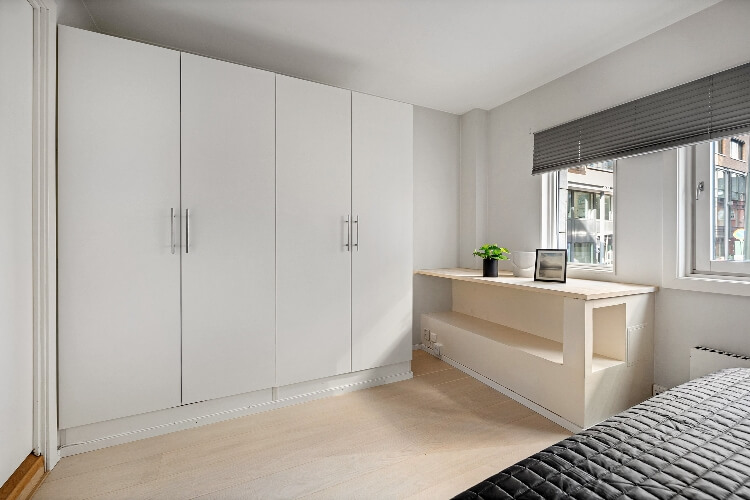

Many buyers expect fitted wardrobes to remain with the property after completion. Because they are built into the room and attached to the walls, floor or ceiling, fitted wardrobes are often treated differently from freestanding furniture.
If you're planning to remove a fitted wardrobe before moving house, it's important to make this clear during the sales process to avoid confusion or disputes later on.
Failing to do so could lead to disputes, delays or disappointment once the buyer moves in.
What is a fitted wardrobe?
A fitted wardrobe is designed specifically for a room and is attached to the walls, floor or ceiling.
Common examples include:
- Floor-to-ceiling wardrobes
- Built-in bedroom storage
- Sliding-door fitted wardrobes
- Bespoke alcove wardrobes
- Walk-in wardrobe storage systems
Are fitted wardrobes included in a house sale?
In many cases, yes.
Buyers often view fitted wardrobes as part of the property because:
- They are fixed in place.
- Removing them may damage walls or flooring.
- They are designed specifically for that room.
- The room may look incomplete without them.
For these reasons, many buyers will assume fitted wardrobes are included unless the seller states otherwise.
Can you remove a fitted wardrobe before selling?
Yes, but you should make your intentions clear before agreeing a sale.
If you're planning to remove a fitted wardrobe because:
- It was expensive.
- It was recently installed.
- You want to reuse it in your next home.
- It contains specialist storage features.
You should disclose this as early as possible.
If you want to remove a fitted wardrobe:
- Tell your estate agent.
- Inform your solicitor or conveyancer.
- Declare it on the TA10 Fittings and Contents Form .
- Ensure the buyer agrees before contracts are exchanged.
Most disagreement around fixtures and fittings happens when buyers discover late in the process that something they expected to remain is being removed.
What about sliding wardrobes?
Sliding wardrobes are one of the most common grey areas.
Although the doors move, the wardrobe structure itself is usually fixed to the property.
As a result, buyers often expect sliding wardrobes to remain after completion.
If you're unsure whether a wardrobe should stay or go, it's better to declare it than leave room for misunderstanding.
What does the TA10 form say?
The TA10 Fittings and Contents Form helps sellers identify what is:
- Included in the sale
- Excluded from the sale
- Available by separate negotiation
The document helps buyers and sellers understand exactly what is included in the purchase before contracts are exchanged.
If you intend to remove a fitted wardrobe, it should be made clear during this stage of the conveyancing process.
For more information, see the HomeOwners Alliance guide to the TA10 form .
Common scenarios
The wardrobe was expensive. Can I take it?
Potentially, yes.
However, buyers may have viewed the wardrobe as part of the property when deciding to make an offer, so it's important to raise the issue early.
The wardrobe was installed recently
A recent installation doesn't automatically mean you can remove it without discussion.
What matters is whether the wardrobe appears to form part of the property.
The wardrobe is freestanding but looks built in
If the wardrobe can be removed without affecting the room, it is more likely to be treated as furniture.
Even so, it's worth clarifying this with the buyer to avoid any assumptions.
Common mistakes sellers make
Assuming buyers know it's not included
Never assume a buyer understands your intentions.
If a wardrobe appears built in, the buyer may reasonably expect it to remain.
Removing wardrobes after viewings
What buyers see during viewings often influences what they believe they are purchasing.
Leaving discussions until the last minute
Conversations about fixtures and fittings are much easier before contracts are exchanged than just before completion.
Fitted vs freestanding wardrobes
Fitted wardrobes
- Attached to walls, floors or ceilings
- Designed for a specific room
- Difficult to remove
- Often expected to stay
Freestanding wardrobes
- Can be moved easily
- Not attached to the property
- Usually considered furniture
- Commonly removed by sellers
Frequently asked questions
Can I take my fitted wardrobe when I move house?
Potentially, but you should tell the buyer before contracts are exchanged and ensure it is recorded correctly during the sale.
Are fitted wardrobes classed as fixtures?
They often are because they are attached to the property and designed to remain in place.
Can a buyer complain if a fitted wardrobe is removed?
Yes. If the buyer reasonably expected the wardrobe to be included, removing it could lead to a dispute.
Are sliding wardrobes included in a house sale?
Often yes, particularly where the wardrobe structure is fixed to the room.
Do walk-in wardrobes stay with the property?
In most cases, fitted storage systems within walk-in wardrobes are expected to remain.
Final thoughts
Fitted wardrobes often fall into the same category as fitted kitchens, integrated appliances and other built-in features.
While you may have paid for the wardrobe, buyers frequently view it as part of the property itself. If you would like to take it with you, discuss it early, document it clearly and avoid leaving the decision until the final stages of the sale.
Related articles
Looking for guidance on other fixtures and fittings? These articles can help:
- What fittings should you leave behind when you move? An overview of the items buyers may expect to remain with a property.
- Can you take integrated appliances when you move house? Covers dishwashers, ovens, fridge freezers and other built-in appliances.
- Can you take curtains and blinds when you move? Explains what's usually expected to stay and what can normally be removed.
Need storage insurance?
Moving into self-storage? Protect your belongings with specialist self-storage insurance and get cover in minutes.
Not sure where to keep items you're taking with you?
If you need somewhere safe to store furniture, appliances, or personal belongings during your move, browse our UK self-storage facilities to find a suitable storage solution near you.
Sources
- The Law Society: TA10 Fittings and Contents Form
- HomeOwners Alliance: TA10 form guidance
- Conveyancing guidance on fixtures and fittings
First published: 24 November 2026
Reviewed by: Store & Insure Content Team
Image from: Pixabay